Pickleball Paddle Edge Guard Repair
Why Edge Guards Chip and Crack
Edge guards on pickleball paddles chip primarily due to direct contact with hard surfaces during play—like hitting the court during a drop shot or scraping the edge against the net post. The constant impact from dinks, volleys, and accidental ground strikes gradually wears down the protective strip, especially at corners where force concentrates. Paddles with thinner guards or lower-quality materials (common in entry-level models) are more prone to damage, but even premium paddles from established brands can suffer chips with frequent use. Environmental factors like extreme heat or cold can also make guards brittle over time, increasing vulnerability.
Temporary Fixes for Minor Edge Guard Damage
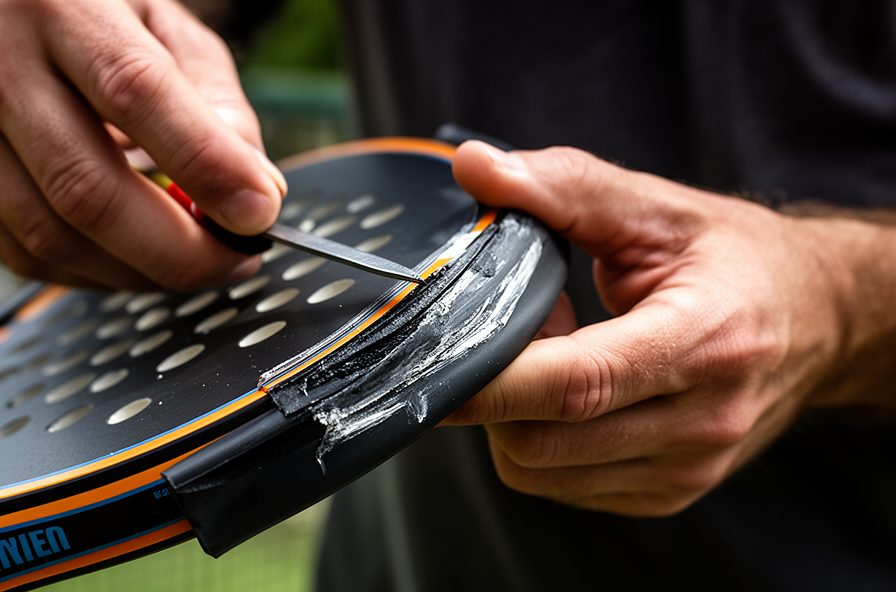
For small chips or gaps where the guard is still mostly intact, temporary fixes can buy you time until a permanent solution is feasible. Start by cleaning the damaged area with isopropyl alcohol to remove dirt and oils. For tiny gaps, a thin layer of clear nail polish or super glue (applied sparingly with a toothpick) can seal the crack and prevent moisture from seeping into the paddle core. If the guard is lifting but not fully detached, use athletic tape wrapped tightly around the edge as a quick stabilizer—this won’t last long but avoids further peeling during your next game. Avoid heavy-handed applications of glue or tape that alter the paddle’s weight or balance, as this can affect playability and potentially violate USAPA guidelines.
Permanent Repair Methods for Edge Guards
For lasting repairs, replacing the edge guard entirely is the most effective approach. First, remove the old guard carefully with dental floss or a thin wire, sliding it under the strip to avoid scratching the paddle face. Clean the paddle edge thoroughly with rubbing alcohol to eliminate adhesive residue. Order a replacement guard strip matching your paddle’s dimensions—many generic brands sold on Amazon offer universal sizes or model-specific kits for popular paddles like those from Selkirk, Paddletek, or Onix. Apply the new guard by peeling off the adhesive backing and slowly pressing it onto the paddle edge, using a credit card to smooth out bubbles. For a professional finish, heat the guard gently with a hairdryer to activate the adhesive, but never overheat, as this can warp the paddle.
When to Replace the Edge Guard Instead of Repairing
Replace the edge guard rather than attempt a repair if the damage extends beyond surface-level chipping. This includes scenarios where the guard is completely missing from a significant section (over 2 inches), the paddle core is exposed to moisture (causing discoloration or softness), or multiple large cracks compromise structural integrity. If the paddle has sustained repeated edge impacts leading to core delamination—where the surface material separates from the inner core—a new guard alone won’t fix the underlying issue. Also, avoid patching guards on paddles nearing the end of their lifespan; investing in a replacement guard on an old paddle is rarely cost-effective compared to buying a new paddle.
Preventing Future Edge Guard Damage
Extend your edge guard’s life with simple habit changes. Always set your paddle down with the face up, never resting it on the edge, and avoid leaning it against hard surfaces like walls or net posts. During play, practice controlled dinks and volleys to minimize accidental edge contact with the court or net. Invest in a padded paddle cover for storage and transport—this shields the edge from bumps in your bag. For frequent players, consider upgrading to a paddle with a reinforced edge guard; some newer models from brands like Engage or Gamma integrate thicker, more durable materials directly into the frame. Finally, rotate your paddle during play to distribute wear evenly, rather than consistently hitting with the same edge section.
When It’s Time to Replace the Entire Paddle
Repairing the edge guard isn’t always the solution—replace the whole paddle if you notice certain red flags. If the core feels soft or “spongy” when pressed (a sign of water damage or delamination), no edge guard fix will restore performance. Significant weight changes, like a paddle feeling heavier due to moisture absorption, indicate internal damage beyond surface repair. Also, if the paddle face has developed large cracks or warping—especially near the edges where the guard was damaged—it’s time for a new one. Paddles with USAPA approval stickers should be retired if the damage affects playability, as modified paddles risk disqualification in tournaments. For players using older paddles (5+ years), upgrading often brings better performance with today’s lightweight, responsive designs from trusted brands.
Shop pickleball paddle edge guard repair on Amazon →
As an Amazon Associate we earn from qualifying purchases.