Best Pickleball Paddles: A Complete Buyer’s Guide
Pickleball paddles are more than just a tool—they’re an extension of your game. Whether you’re just starting out or looking to upgrade, choosing the right paddle can make all the difference in your control, power, and overall enjoyment on the court. Let’s break down everything you need to know to find the perfect one.
Understanding Paddle Weight: Find Your Sweet Spot
Pickleball paddles typically range from 6.8 to 14 ounces. Lighter paddles (6.8–7.8 oz) offer faster reaction times and are easier on the arm—ideal for beginners, seniors, or players with joint concerns. Midweight paddles (7.9–8.4 oz) balance control and power, making them the most popular choice for intermediate players. Heavier paddles (8.5 oz and up) deliver more power on drives and volleys but require stronger wrists and better technique. Don’t just chase weight—try a few in person if you can. A paddle that feels right in your hand will help you stay consistent and reduce fatigue over long matches.
Core Materials: The Heart of Your Paddle
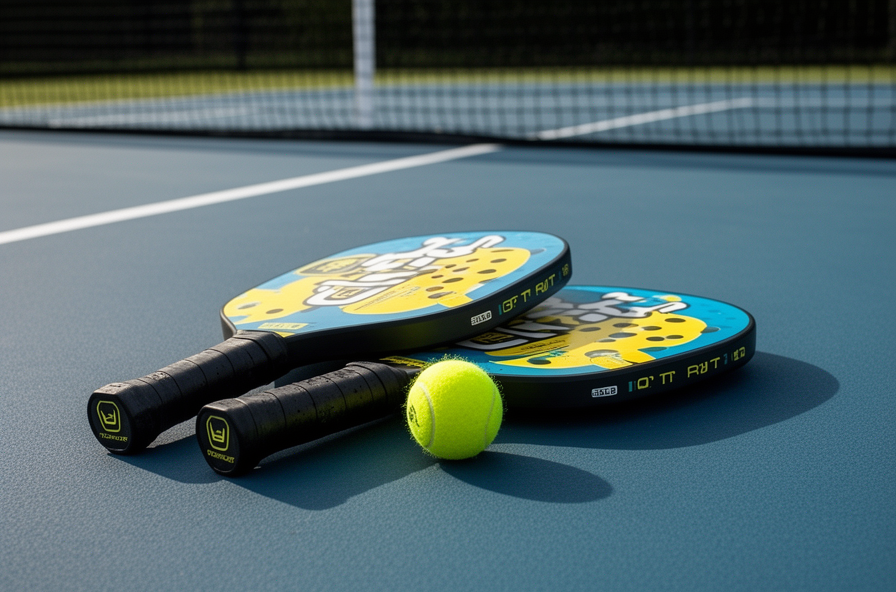
The core affects how your paddle feels and performs. Most paddles use one of three core materials: polymer, aluminum, or nomex. Polymer cores are the most common today—they’re durable, quiet, and offer a balanced mix of control and pop. They’re great for all skill levels and are the go-to for most recreational and competitive players. Aluminum cores are lighter and more responsive but tend to be louder and less forgiving on mishits. Nomex cores, once popular in high-end paddles, offer excellent power and vibration dampening but are now less common due to cost and availability. For beginners and most players, stick with a polymer core—it’s reliable, affordable, and versatile.
Surface Materials: Control vs. Power
The paddle’s surface material impacts spin, feel, and durability. Two main types dominate the market: fiberglass and carbon fiber. Fiberglass surfaces are slightly softer, offering more control and a consistent feel, especially on dinks and third-shot drops. They’re also more forgiving on off-center hits, making them ideal for beginners. Carbon fiber surfaces are stiffer and more responsive, delivering more power and spin potential—perfect for advanced players who can consistently hit the sweet spot. If you’re just starting out, fiberglass gives you room to grow. If you’re already comfortable with your form and want to add aggression to your game, carbon fiber can elevate your play.
Grip Size and Shape: Fit Matters More Than You Think
A grip that’s too big or too small can lead to wrist strain, poor control, or even injury. Most paddles come in grip sizes from 4 inches to 4.5 inches. To find your ideal size, hold the paddle as if you’re shaking hands—your fingers should comfortably wrap around the grip with a slight gap between your thumb and index finger. Too tight? You’ll tense up. Too loose? You’ll lose control. As for shape, most paddles are either classic (slightly wider at the top) or elongated (taller with a narrower profile). Classic shapes offer more surface area and are forgiving for beginners. Elongated shapes extend your reach and are favored by advanced players who like to cover the net. Don’t overlook grip texture, either—look for a non-slip surface that feels secure even when your hands sweat.
Price Tiers and What You Get for Your Money
Pickleball paddles range from under $50 to over $200. Entry-level paddles ($40–$80) are great for beginners—they’re durable, use polymer cores and fiberglass surfaces, and offer solid performance without breaking the bank. Mid-range paddles ($80–$150) often feature upgraded materials like carbon fiber, better edge guards, and improved balance. These are the sweet spot for serious recreational players and those looking to improve. High-end paddles ($150+) use premium components, custom weight distributions, and advanced manufacturing—ideal for tournament players or those who play daily. Remember: price doesn’t always equal performance. Many players find their perfect paddle in the mid-range. Focus on fit and feel over brand names.
Beginner vs. Advanced: How to Choose Based on Your Skill Level
If you’re new to pickleball, prioritize control and comfort. Choose a midweight paddle (7.5–8.2 oz) with a polymer core and fiberglass surface. A classic shape and comfortable grip will help you learn proper technique without fighting your equipment. As you progress, you’ll naturally start to crave more power and spin. That’s when you might consider a slightly heavier paddle with a carbon fiber face and an elongated shape. Advanced players often customize their paddles based on their playing style—net rushers might prefer a lighter paddle for quick volleys, while baseline players may opt for heavier options to generate power on drives. The key is to evolve with your game. Don’t rush to buy the most expensive paddle—start with something reliable, play consistently, and upgrade when you notice your current paddle is limiting your progress.
Final Tip: Try Before You Buy
No guide can replace firsthand experience. If possible, borrow a few paddles from friends, visit a local pro shop, or attend a demo day. Pay attention to how the paddle feels on dinks, volleys, and drives. Does it vibrate too much? Does it feel heavy after 10 minutes? Trust your instincts. The best pickleball paddle isn’t the one with the fanciest specs—it’s the one that feels like it was made for your hands and your game.
Shop pickleball paddles on Amazon →
As an Amazon Associate we earn from qualifying purchases.