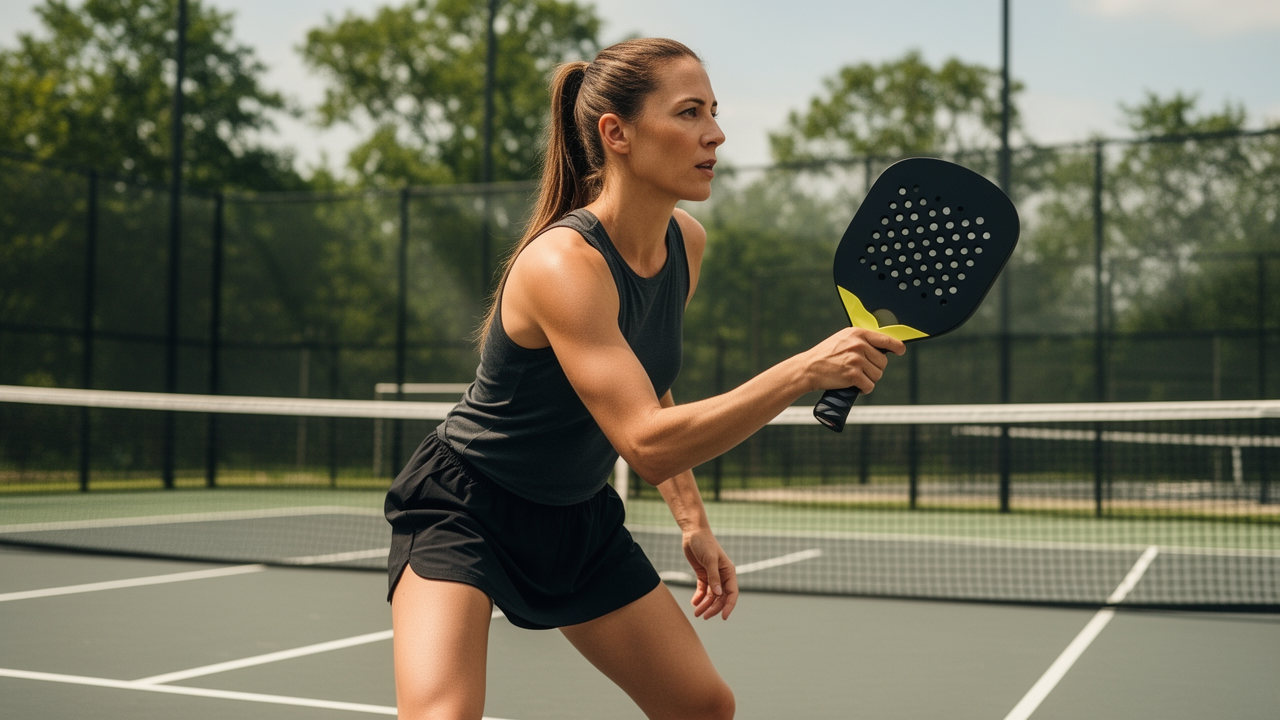
How to Play Pickleball: Simple Rules for Beginners
How to Play Pickleball: Simple Rules for Beginners
Pickleball is easy to learn with simple rules designed for fast-paced fun, making it perfect for players of all ages. This guide breaks down the essential scoring, serving, and basic strategies you need to start playing confidently. You’ll be ready for the court in no time with these clear, step-by-step instructions.
The Basics of the Court
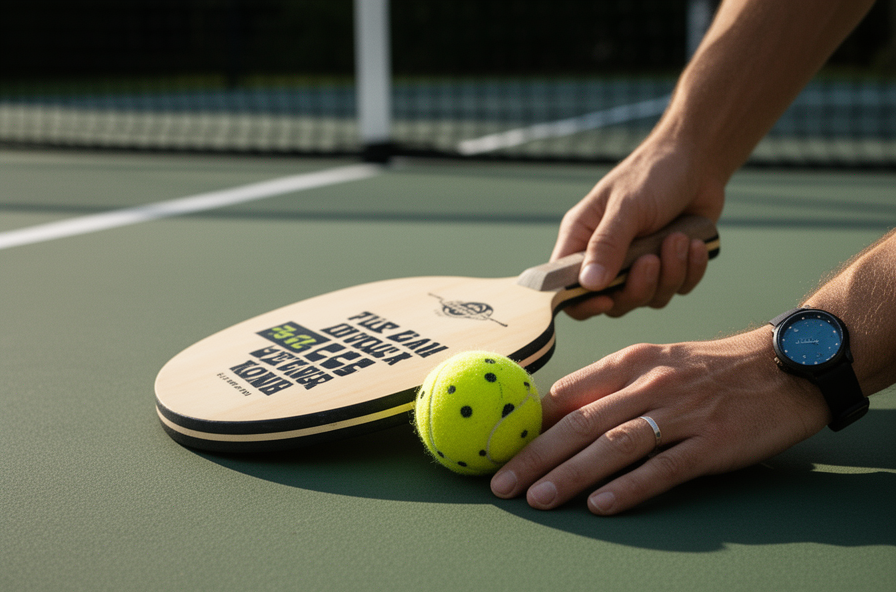
Understanding the court layout is your first step. A pickleball court is 20 feet wide and 44 feet long for doubles (singles uses the same length but narrower width). Key lines to know: the non-volley zone (or “kitchen”), which is a 7-foot area on both sides of the net where you cannot volley the ball; the baseline, the back boundary line; and the service lines, which divide the court into two service boxes. The net height is 36 inches at the ends and 34 inches in the middle. Familiarize yourself with these lines before your first serve; stepping on or over them during a serve or while volleying causes a fault.
For beginners, focus on staying behind the baseline to serve and keeping your feet out of the kitchen when attempting volleys. Many beginner paddles from brands like Franklin, Selkirk, or Onix feature larger sweet spots to help with consistent contact, which is helpful as you learn court positioning. Remember, the court lines define the legal play area, so always aim your shots within them.
Scoring Made Simple
Scoring in pickleball is straightforward once you grasp a few key points. Only the serving team can score points. Games are typically played to 11 points, and you must win by at least 2 points (though some games go to 15 or 21 points with the same win-by-2 rule). When calling the score, state three numbers: the serving team’s score, the receiving team’s score, and the server number (1 or 2 in doubles). For example, “5-3-1” means the serving team has 5 points, the receiving team has 3, and it’s the first server’s turn.
Points are scored when the opposing team commits a fault. Faults include hitting the ball out of bounds, failing to clear the net, volleying from the kitchen, stepping on the kitchen line during a volley, or missing the ball entirely. In doubles, the first server on a team continues serving until their team faults. Then, the second server serves. Only when the receiving team wins a rally do they gain the right to serve. This structure keeps the game flowing and ensures both teams get equal opportunity to serve over time.
Serving Rules Demystified
Serving correctly is crucial to starting every point. The serve must be underhand, with the paddle contacting the ball below your waist level. The ball must be dropped or released from the hand and struck on the fly; you cannot bounce the ball first. Your feet must be entirely behind the baseline at the moment of contact, and you cannot touch the baseline or the court with either foot. The serve must travel diagonally across the net to land in the opponent’s service box – hitting the line on the serve is a fault.
For beginners, practice your underhand motion to ensure it’s smooth and consistent. The ball must clear the non-volley zone line; a serve landing in the kitchen is a fault. If the serve touches the net but still lands in the correct service box, it’s a “let” and is replayed with no penalty. Focus on accuracy over power initially; a consistent, deep serve is more effective for beginners than a hard one that frequently goes out. Many beginner-friendly paddles offer good control to help with this.
The Double Bounce Rule Explained
This unique rule is fundamental to pickleball strategy and often confuses new players. After the serve, the receiving team must let the ball bounce once before returning it. Then, the serving team must also let the returned ball bounce once before they hit it back. Only after these two bounces (one by each team) can players choose to volley the ball (hit it in the air without letting it bounce). This rule applies to every single point, starting with the serve.
The double bounce rule forces players to stay back initially, promoting longer rallies and strategic play near the baseline. It prevents powerful smashes right after the serve, making the game more accessible. As a beginner, resist the urge to rush the net immediately. Let the ball bounce, step in after the second bounce, and focus on getting the ball back deep into your opponent’s court. This patience is key to avoiding early faults and building confidence.
Basic Strategies for New Players
Start simple and focus on consistency. Your primary goal is to keep the ball in play and force your opponents to make errors. Stay behind the baseline during the initial exchange after the serve and return; this gives you more time to react. Aim for the middle of the court whenever possible – it forces opponents to communicate and can create confusion, especially in doubles. Avoid risky shots down the line early in the rally; cross-court shots are generally safer.
As the rally progresses and the double bounce rule is satisfied, consider moving slightly forward. However, stay well behind the non-volley zone line until you are ready to hit a soft “dink” shot (a gentle drop shot) or a controlled volley. A dink shot is often the best option when approaching the kitchen; it keeps the ball low and forces opponents to hit up. Don’t try to hit winners from the baseline; instead, focus on placement and depth. Many players find that paddles with a balanced weight feel help with controlled dinks and consistent groundstrokes as they learn.
Common Mistakes to Avoid
New players frequently step into the kitchen while attempting a volley – remember, your foot cannot touch the non-volley zone line or the area inside it when you volley the ball. Another common error is forgetting the double bounce rule, either by volleying the return of serve or volleying the serve return before it bounces. Stepping on the baseline during the serve or hitting a serve that lands outside the diagonal service box are also frequent faults.
Impatience leads many beginners to rush shots, especially trying to hit hard winners too soon. This often results in errors. Focus on getting every ball back over the net with control. Avoid looking at the scoreboard too often; keep your eyes on the ball. Also, ensure you call the score correctly before each serve to avoid confusion. If you’re unsure about a rule, ask your opponents – pickleball is a very social sport with a strong emphasis on sportsmanship and fair play. Using a paddle with a larger face can help reduce errors caused by off-center hits as you develop better hand-eye coordination.
Mastering these fundamental rules and avoiding common pitfalls will have you enjoying pickleball quickly. Remember, the game is designed to be fun and accessible. Focus on consistent contact, understanding the court, and applying the double bounce rule. With practice, scoring and strategy will become second nature. Grab a paddle, find a court, and enjoy the game – you’ve got this!
Shop pickleball rules for beginners on Amazon →
As an Amazon Associate we earn from qualifying purchases.