Best Pickleball Balls: Indoor vs Outdoor Explained
Choosing the right pickleball balls can make a significant difference in your game. Understanding the key differences between indoor and outdoor options helps you select the best fit for your playing environment. Let’s break down what you need to know to make an informed decision.
Understanding the Hole Count: Indoor (26) vs Outdoor (40)
The number of holes in a pickleball isn’t just cosmetic—it directly impacts play. Indoor balls typically feature 26 holes, designed for controlled environments with consistent temperatures and smooth surfaces. This configuration creates slightly less air resistance, resulting in a slower, more predictable trajectory that suits indoor court dynamics. Outdoor balls, with their 40-hole pattern, compensate for variables like wind and rougher surfaces. The extra holes reduce the ball’s weight and allow air to flow through more freely, helping maintain a stable flight path even when conditions aren’t ideal.
Using the wrong type can frustrate your game. An outdoor ball indoors often feels too fast and unpredictable, while an indoor ball outside might not travel far enough or could bounce erratically on asphalt. Many players mistakenly assume hole count is arbitrary, but it’s a crucial engineering detail tied to where you play. Brands like Onix, Dura, and Franklin clearly label their balls as indoor or outdoor to prevent this mismatch.
Durability and Cracking: Why It Happens and How to Avoid It
Durability varies significantly between indoor and outdoor balls due to material differences. Outdoor balls are molded from harder plastic composites to withstand rough surfaces, sun exposure, and temperature swings. While this makes them resilient against abrasion, it also increases the risk of cracking when they hit hard surfaces at high speeds or are stored improperly. Indoor balls use softer plastic for consistent bounce on smooth floors, making them less prone to cracking but more vulnerable to scuffing from repeated contact with court lines.
Cracking usually occurs from impact stress or temperature extremes—never store balls in a hot car or freezing garage. If you notice cracks, replace the ball immediately, as it will bounce inconsistently and could damage paddles. To maximize lifespan, rotate balls during play and store them in a cool, dry place. Remember, even high-quality balls have a limited life; frequent players often replace outdoor balls after 10-15 hours of play when cracks appear.
The Importance of USAPA Approval for Competitive Play
For players participating in sanctioned tournaments or club leagues, USA Pickleball (formerly USAPA) approval is non-negotiable. Only balls meeting specific standards for weight, diameter, bounce height, and sound are permitted in official play. Both indoor and outdoor balls can be approved, but you must verify each model via USA Pickleball’s current list—approval is model-specific and can change as standards evolve.
Using non-approved balls in competitive settings can lead to disqualification or inconsistent gameplay. Reputable brands prominently display USA Pickleball certification on packaging, and you’ll find approved options from manufacturers like Onix, Dura, Franklin, and Jugs. Casual players may not need certified balls, but if you plan to join tournaments, always double-check the model against the official list before purchasing.
Ball Colors and Visibility: Choosing What Works for You
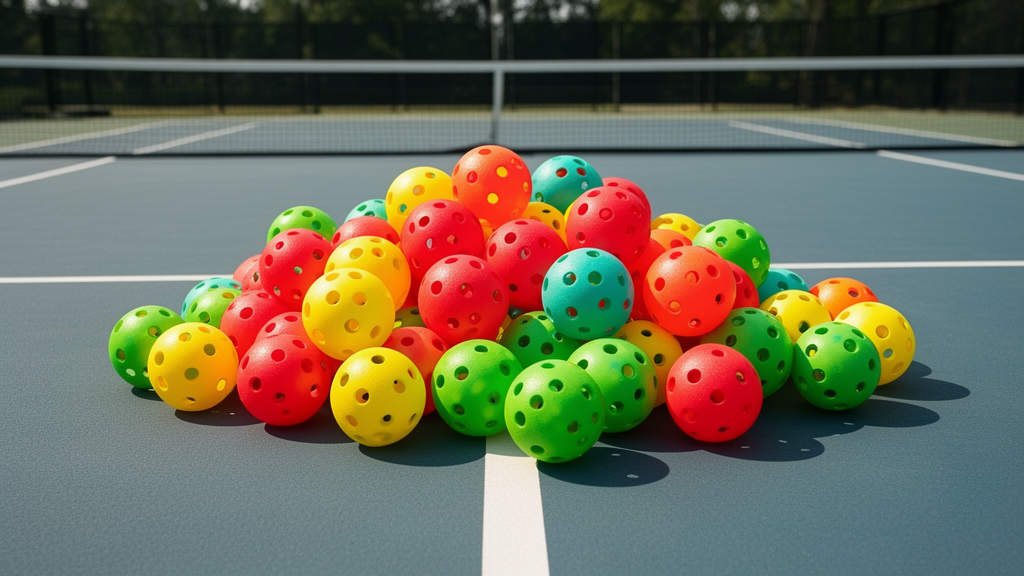
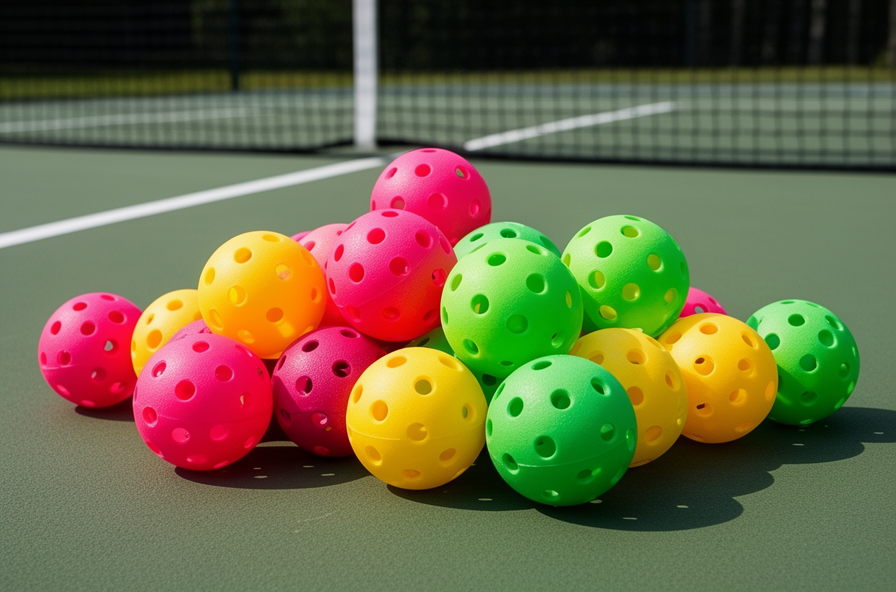
Color isn’t just about preference—it’s a functional choice affecting visibility. Indoor balls are almost always white, optimized to stand out against darker wood or composite floors under artificial lighting. Outdoor balls use bright hues like orange, yellow, or green, which contrast sharply with asphalt or concrete courts and are easier to track in direct sunlight. Some players even choose specific colors based on their court’s surroundings; for example, yellow balls may be harder to see on sun-bleached courts, while orange can disappear on red clay surfaces.
Consider your lighting conditions: if you play early morning or evening outdoors, opt for high-visibility colors like neon yellow. For indoor courts with poor lighting, white remains the best choice. While color doesn’t impact performance, it directly influences how quickly you react to shots. Many bulk packs include mixed colors, so you can test which works best for your eyes without committing to a single shade.
Bulk Buying Tips and How to Choose the Right Ball
Buying in bulk—like 36-packs or 72-packs—saves money for clubs, leagues, or avid players but requires smart selection. First, confirm your primary playing environment. If you play exclusively indoors, focus on 26-hole indoor balls; outdoor players should stick with 40-hole models. Check for USA Pickleball approval if you anticipate competitive play, and consider color visibility for your specific court. Bulk packs from brands such as Dura, Franklin, or Onix often include a mix of features, so read descriptions carefully to avoid getting the wrong type.
When choosing, ask yourself: Where do I play most often? If you’re split between indoor and outdoor courts, it’s worth owning separate sets. What’s my budget for replacement? Outdoor balls may cost slightly more but last longer outdoors, while indoor balls wear faster on rough surfaces. Do I need tournament compliance? If yes, prioritize USA Pickleball-approved models. Finally, test a single pack before buying bulk—play a few games to ensure the ball’s weight, bounce, and sound feel right for your style. This prevents wasting money on large quantities that don’t suit your needs.
Ultimately, the best pickleball balls align with your court, frequency of play, and goals. Whether you’re a weekend player or a tournament regular, matching the ball to your environment ensures consistent, enjoyable games without unexpected surprises. Focus on certified, purpose-built options, and you’ll spend less time replacing cracked or inconsistent balls and more time enjoying the sport.
Shop pickleball balls on Amazon →
As an Amazon Associate we earn from qualifying purchases.