Best Pickleball Paddles for Beginners
Pickleball is one of the fastest-growing sports in the U.S., and if you’re just starting out, choosing the right paddle can make all the difference. The best pickleball paddles for beginners prioritize forgiveness, control, and value—so you can focus on learning the game, not fighting your equipment.
What Beginners Really Need: Forgiveness, Control, and Value
As a new player, you’re still learning timing, placement, and shot consistency. That’s why the best pickleball paddles for beginners aren’t the ones with the highest power or fanciest tech—they’re the ones that help you hit clean shots even when you don’t make perfect contact. Look for paddles with a larger sweet spot, moderate weight, and a surface that gives you good ball feel without being too spin-heavy. You don’t need to spend $200 on a pro-level paddle to enjoy the game. Many quality options under $100 offer excellent control and durability, helping you build confidence without breaking the bank.
Weight and Grip: Finding Your Comfort Zone
Weight matters more than you think. For beginners, a paddle between 7.3 and 7.8 ounces is ideal. Lighter paddles (under 7.3 oz) are easier to maneuver but may feel flimsy on volleys. Heavier paddles (over 8 oz) offer more power but can tire your arm quickly—especially if you’re still building strength. Aim for the middle: a paddle that feels balanced and comfortable after 15 minutes of play.
Weight matters more than you think. For beginners, a paddle between 7.3 and 7.8 ounces is ideal. Lighter paddles (under 7.3 oz) are easier to maneuver but may feel flimsy on volleys. Heavier paddles (over 8 oz) offer more power but can tire your arm quickly—especially if you’re still building strength. Aim for the middle: a paddle that feels balanced and comfortable after 15 minutes of play.
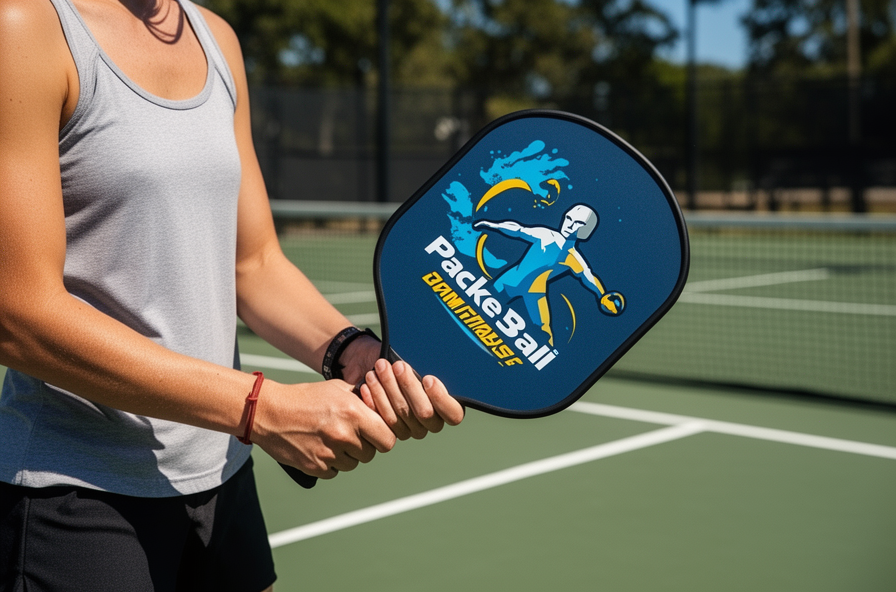
Grip size is just as important. Most paddles come in sizes from 4 inches to 4 5/8 inches. To find your fit, hold the paddle as if you’re shaking hands—there should be a slight gap between your fingertips and thumb. If your fingers wrap all the way around, the grip is too small. If you can’t reach your thumb, it’s too big. Most beginners do well with a 4 1/4-inch grip, but try a few if you can. Don’t ignore grip material either—cushioned or textured grips reduce vibration and improve control during long games.
What to Avoid as a New Player
Steer clear of paddles marketed as “power bombs” or “pro-level” for beginners. These often have thin faces, small sweet spots, or extreme weight distributions that punish off-center hits. Avoid paddles with exposed carbon fiber edges—they’re great for advanced players who know how to angle their shots, but beginners tend to hit the frame more often, leading to chipping and damage.
Also skip paddles with no brand reputation or unclear materials. While some unknown brands offer low prices, they often use inconsistent core materials or poor surface bonding, which leads to warping or delamination after a few months. Stick with established names like Selkirk, Engage, Gamma, or Onix—they’ve been tested by thousands of players and offer solid warranties.
Sets vs. Single Paddles: Which Is Right for You?
Many beginners consider buying a pickleball paddle set—usually two paddles and a few balls—for under $80. These are a great way to start if you’re playing with a partner or plan to share equipment. Sets from brands like Franklin or Gamma offer decent quality for the price and let you try the sport without a big investment.
But if you’re serious about learning and plan to play regularly, consider buying one quality paddle on its own. You’ll get better control, a more tailored fit, and room to upgrade later. Plus, you can choose a paddle that suits your style—whether you prefer finesse or a bit more punch. Once you’ve played a few weeks and know what feels right, you can always buy a second paddle for a friend or backup.
How to Choose Your First Paddle: A Simple Checklist
Here’s a practical way to narrow your options:
– Weight: 7.3–7.8 oz for balance and control
– Sweet Spot: Look for a larger, centered hitting area (often labeled “widebody” or “extended”)
– Core: Polypropylene or polymer cores are forgiving and durable for beginners
– Face: Fiberglass or composite surfaces offer better control than raw carbon fiber
– Grip: 4 1/4 inches for most adults; test if possible
– Brand: Stick with trusted names like Selkirk, Engage, Gamma, or Onix
– Price: $70–$110 gives you the best value—avoid anything under $50 unless it’s a well-reviewed set
If you can, visit a local pickleball club or store that lets you demo paddles. Many places offer trial programs where you can test two or three models before buying. If that’s not possible, read recent player reviews from verified buyers on major retailers—look for comments like “easy to control,” “great for beginners,” or “no arm fatigue.”
Start Simple, Play Longer
Your first paddle doesn’t need to be perfect—it just needs to support your learning. The best pickleball paddles for beginners help you focus on footwork, placement, and consistency instead of fighting a heavy, unbalanced tool. Choose wisely, play often, and you’ll quickly outgrow your starter paddle. But for now, keep it simple, stay comfortable, and enjoy the game. Pickleball is about fun—and the right paddle makes sure that fun lasts.
Shop pickleball paddles for beginners on Amazon →
As an Amazon Associate we earn from qualifying purchases.