How to Learn Pickleball: Rules and Scoring Explained
Pickleball is the fastest-growing sport in America, and learning the rules is simpler than you think. This guide breaks down the essential court layout, scoring, and key regulations to get you playing confidently. Let’s cover what you need to know to avoid confusion and enjoy your first game.
The Court and Equipment You Need
Understanding the court dimensions and gear is your first step. A pickleball court measures 20 feet wide by 44 feet long for both singles and doubles, identical to a badminton court. The key zones include the non-volley zone (or “kitchen”), a 7-foot area on both sides of the net where you cannot volley the ball. The service line sits 15 feet from the net, creating two service courts (left and right) on each side. Always check for clear boundary lines and a net height of 36 inches at the sidelines and 34 inches at the center.
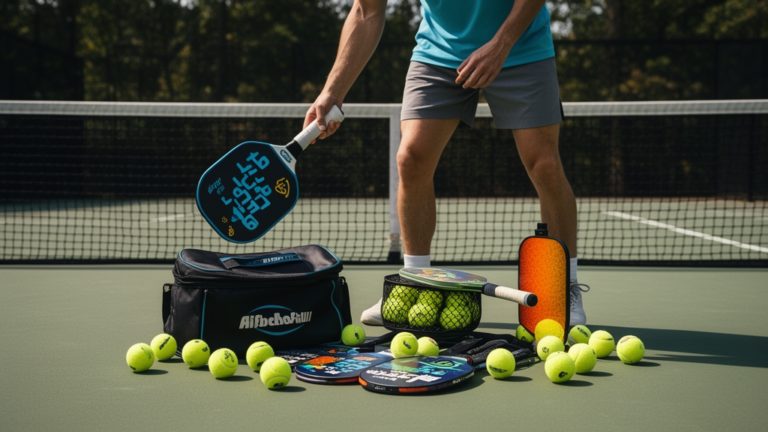
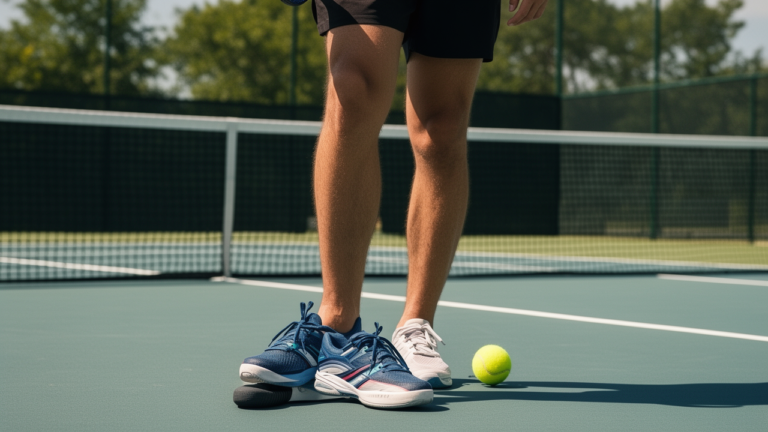
For equipment, you’ll need a paddle, balls, and appropriate footwear. Paddles come in composite, graphite, or wood materials, with most beginners benefiting from a medium-weight, wide-faced option for forgiveness. Pickleball balls are hard plastic with holes—indoor balls have fewer holes than outdoor versions for better wind resistance. Prioritize athletic shoes with lateral support; many players choose cross-training or tennis shoes from major brands available through online retailers. Avoid running shoes, as they lack the stability needed for quick side-to-side movements. Remember: your paddle must meet USA Pickleball’s specifications, but no specific brand requirements exist for recreational play.
Understanding Pickleball Scoring: Rally vs. Side-Out

Pickleball scoring can confuse newcomers, but it’s straightforward once you grasp two key systems. Most leagues and tournaments now use rally scoring, where a point is awarded on every serve—whether the serving or receiving team wins the rally. Games are played to 11 points, and you must win by two. In contrast, side-out scoring (less common today) only awards points to the serving team; if the receiving team wins a rally, they gain the serve (“side out”) but no point. Many beginners learn side-out first in casual settings, but rally scoring dominates competitive play.
Scoring announcements always include three numbers: the serving team’s score, the receiving team’s score, and the server number (1 or 2 in doubles). For example, “5-3-1” means the serving team has 5 points, the receiving team has 3, and it’s the first server’s turn. Serving alternates between the left and right service courts based on the server’s team score: even scores (0,2,4…) serve from the right, odd scores (1,3,5…) from the left. In doubles, both players on a team serve before the ball goes to the opponents.
Mastering the Double-Bounce Rule
The double-bounce rule is non-negotiable and prevents unfair advantages. After the serve, the receiving team must let the ball bounce once before returning it. Similarly, the serving team must let the return bounce before hitting it back. Only after these two bounces (one by each team) can players volley the ball. This rule applies to every rally, not just the serve. If the receiving team volleys before the first bounce, or the serving team volleys before the second bounce, it’s a fault and the point goes to the opponent.
Common errors here include “cherry-picking” (a server’s partner standing at the net to volley immediately after the serve) or misjudging bounce timing. Practice by counting aloud: “one” on the serve bounce, “two” on the return bounce. This ensures you’re ready to volley legally. Remember, the double-bounce rule is why the kitchen exists—stepping in to volley before the second bounce results in a fault, even if the ball hasn’t bounced yet. Consistent practice of this rule builds rhythm and reduces early-game penalties.
Avoiding Common Beginner Mistakes
Every new player makes avoidable errors. The most frequent is stepping into the kitchen to volley before the double bounce completes. To fix this, stay behind the non-volley zone line until after the second bounce. Another issue is mismanaging serves: players often aim too hard for “winners,” leading to faults. Instead, focus on consistency—aim for the service court’s center and vary placement gradually as you improve.
Beginners also overlook rotation in doubles. In doubles, only the serving team can score points, and partners must rotate positions after a side-out. For example, if Server 1 loses the serve, Server 2 becomes the new server. Many teams forget this and serve out of order, resulting in lost points. Keep a simple scorecard to track server numbers. Additionally, players rush volleys too early in rallies. Wait for the ball to drop below net height for better control, especially near the kitchen line. Finally, don’t ignore footwear—slipping during lateral moves causes falls and injuries. Invest in shoes with sticky soles designed for multi-directional movement.
Conclusion: Play More, Learn Faster
Learning pickleball rules is about consistent practice, not memorizing a manual. Start with casual games focusing on one rule at a time—like the double-bounce—before adding scoring complexities. Most clubs offer “learn to play” sessions where experienced players guide beginners through common pitfalls. The more you play, the more these rules become intuitive. Remember, even pros had early games filled with kitchen faults and mis-served points. Grab a paddle, find a local court, and enjoy the process. Your confidence will grow faster than you expect.
Shop how to learn pickleball rules on Amazon →
As an Amazon Associate we earn from qualifying purchases.